A hallmark of neurodegenerative diseases such as Alzheimer's and Parkinson's is the
aberrant aggregation of proteins into amyloid fibrils, and small molecules that
selectively bind to these fibrils hold promise as diagnostics, imaging probes, and
therapeutics. Predicting how such ligands bind to fibril targets, however, presents two
fundamental challenges. First, resolved co-crystal structures of amyloid–ligand
complexes are exceptionally scarce; even with recent advances in cryo-EM only a handful
have been structurally characterized, making supervised training of docking models
impractical for this target class. Second, amyloid fibrils present a binding mode
fundamentally different from globular proteins: ligands intercalate into longitudinal
cross-β grooves and stack cooperatively along the fibril axis, a geometry that
existing docking models are not designed to capture.
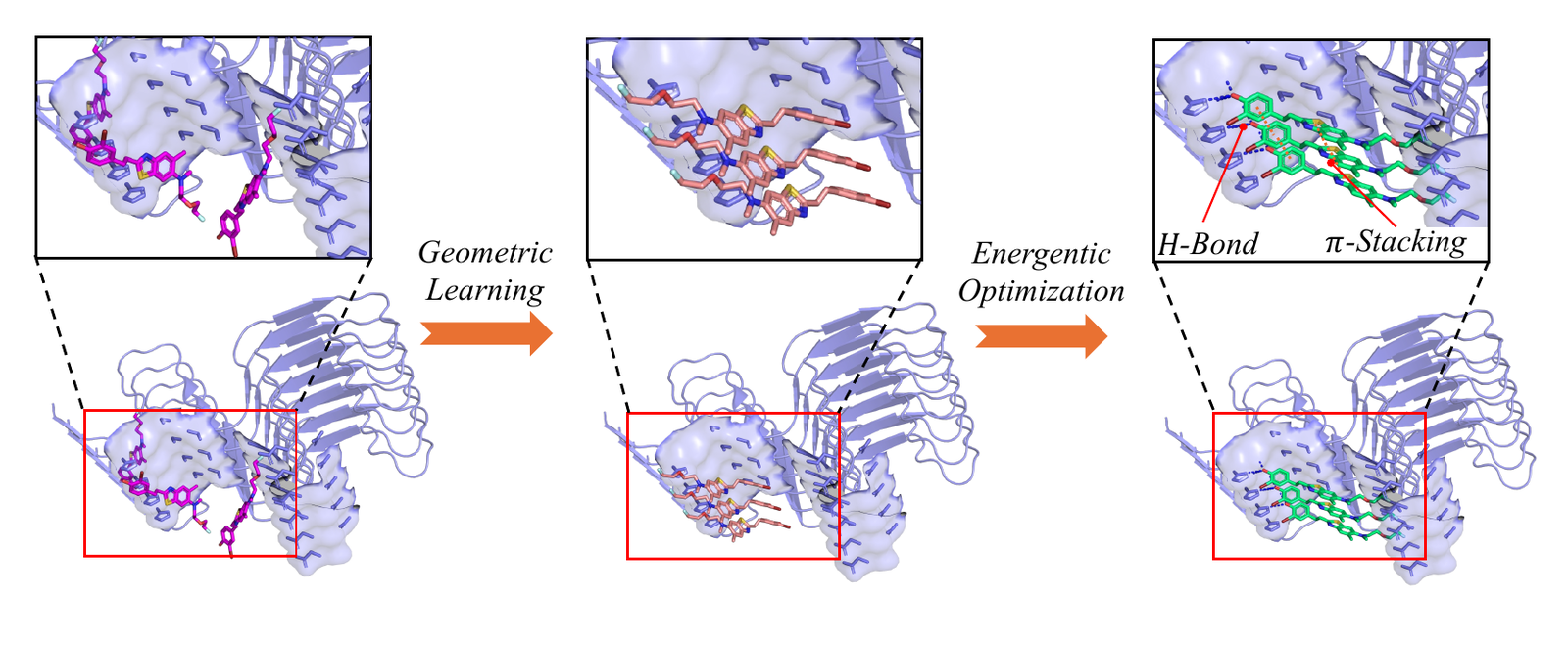
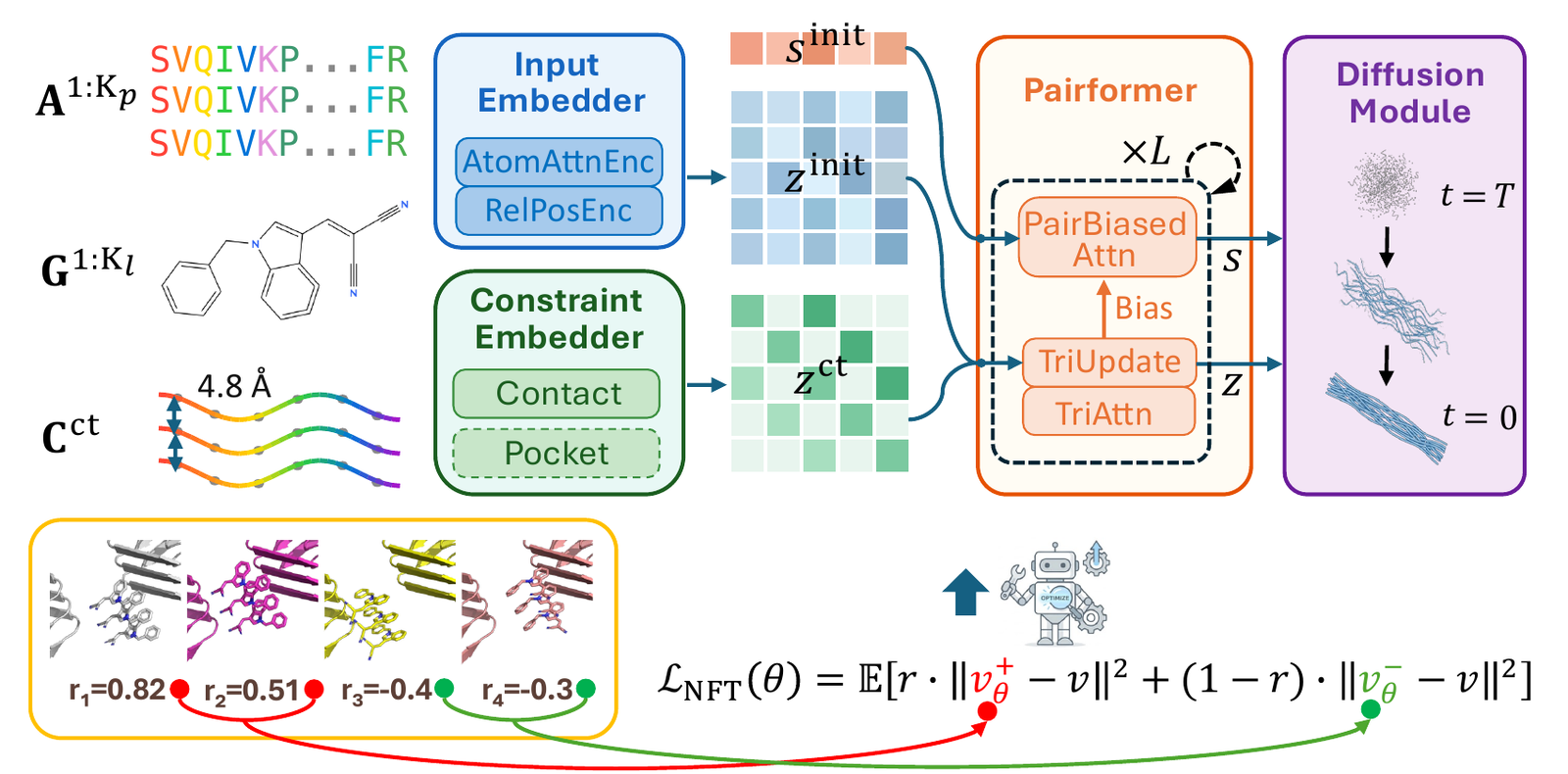
To address these challenges, we present CORAL (COopeRative
Amyloid Ligand docking), a reinforcement learning framework that trains a
generative docking model to produce ligand pose distributions tailored to the
cross-β groove geometry. Our reward explicitly incorporates cooperative
ligand–ligand stacking energy alongside protein–ligand docking affinity,
directly capturing the distinctive binding geometry of amyloid fibrils. We further
introduce a curated evaluation set of amyloid–ligand complexes constructed from
model-generated poses validated by domain experts. Experiments on both experimentally
resolved structures and this evaluation set demonstrate improved pose quality and
binding affinity correlation over existing docking baselines.